In November 2024, the Danish Parliament passed the Agreement on a Green Denmark, which aims to reduce greenhouse gas emissions and nitrogen loads to coastal waters. This regulation, together with the already existing ones regarding for example the growth of catch crops, requires knowledge of how changes in cropping, fertilisation, and mitigation measures can contribute to meeting the environmental targets and simultaneously reduce the tax burden on farmers.
MARVIC partners Jaber Rahimi and Klaus Butterbach-Bahl, together with other authors, have recently explored this critical issue in the scientific article “The environmental trade-off of fertiliser, residue and catch crop management in Danish cropping systems” , published in the journal Agricultural Systems. In this publication, the authors assess the effect of different field management practices on environmental nitrogen losses and the field scale soil net greenhouse gas (GHG) balance in Danish agricultural systems.
For this purpose, highly detailed data from the Danish Agricultural Watershed Monitoring Program (LOOP-program; 2013–2019) were used in combination with the process-based model LandscapeDNDC. Fields were labelled according to the dominant fertiliser used (organic, synthetic, or blend), the use of catch crops, and the retention or removal of crop residues.
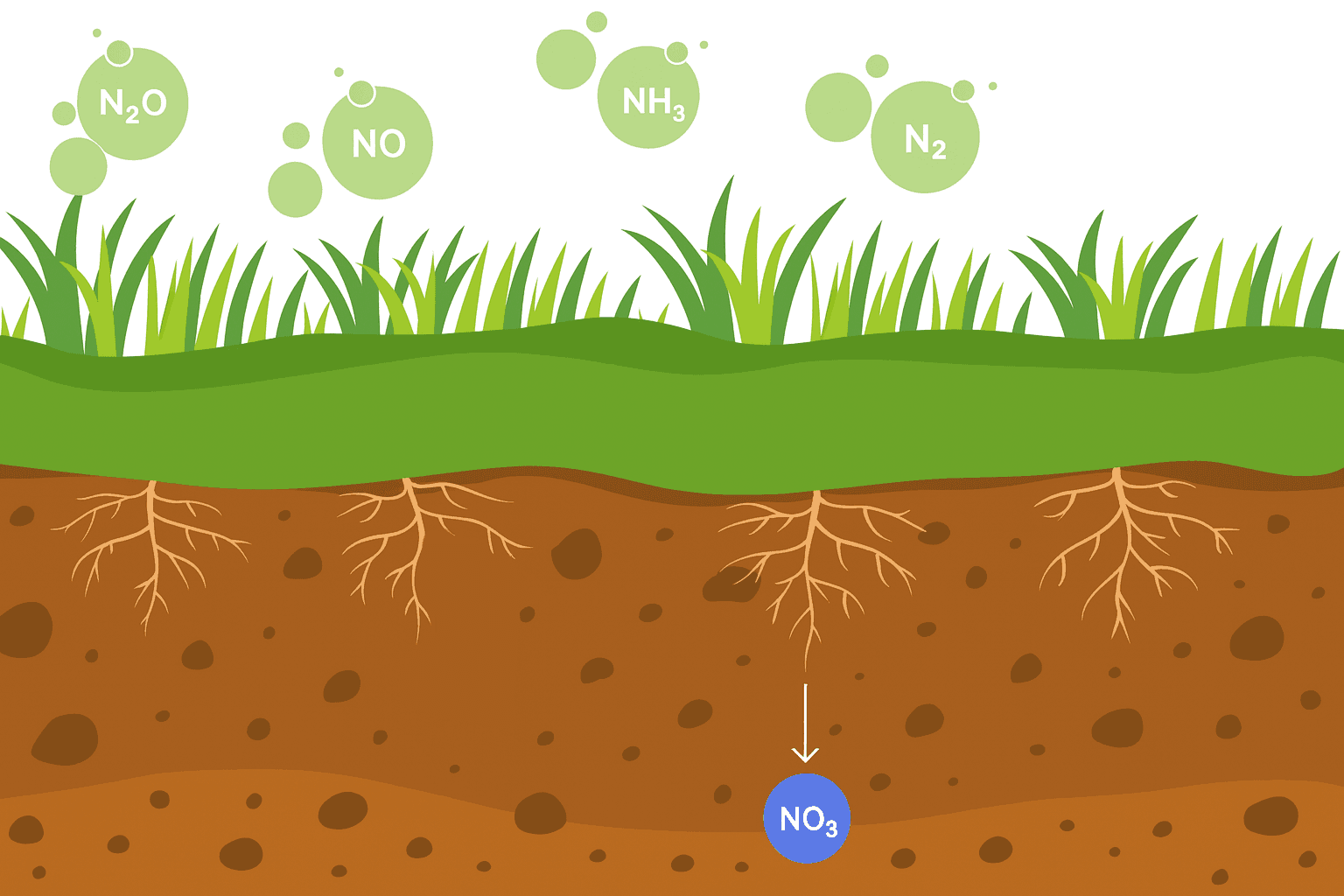
Overall, the results show that field management involves trade-offs between yield and different forms of environmental pollution. For example, mixing organic and synthetic fertilisers turns soils into a stronger net sink of GHGs, but poses challenges related to the efficient transport and management of manure. In turn, the incorporation of crop residues produces an increased carbon sequestration that outweighs the greater N2O emissions. Catch crop cultivation also results in trade-offs, generating a small yield penalty but a large reduction in nitrate leaching, which is a severe problem in Denmark.
All in all, the study demonstrates that there is no single management option that is always superior, and that targeted fertiliser, residue and catch crop management have the potential of increasing the sustainability of crop production systems in Denmark. Follow this link to read the full article.