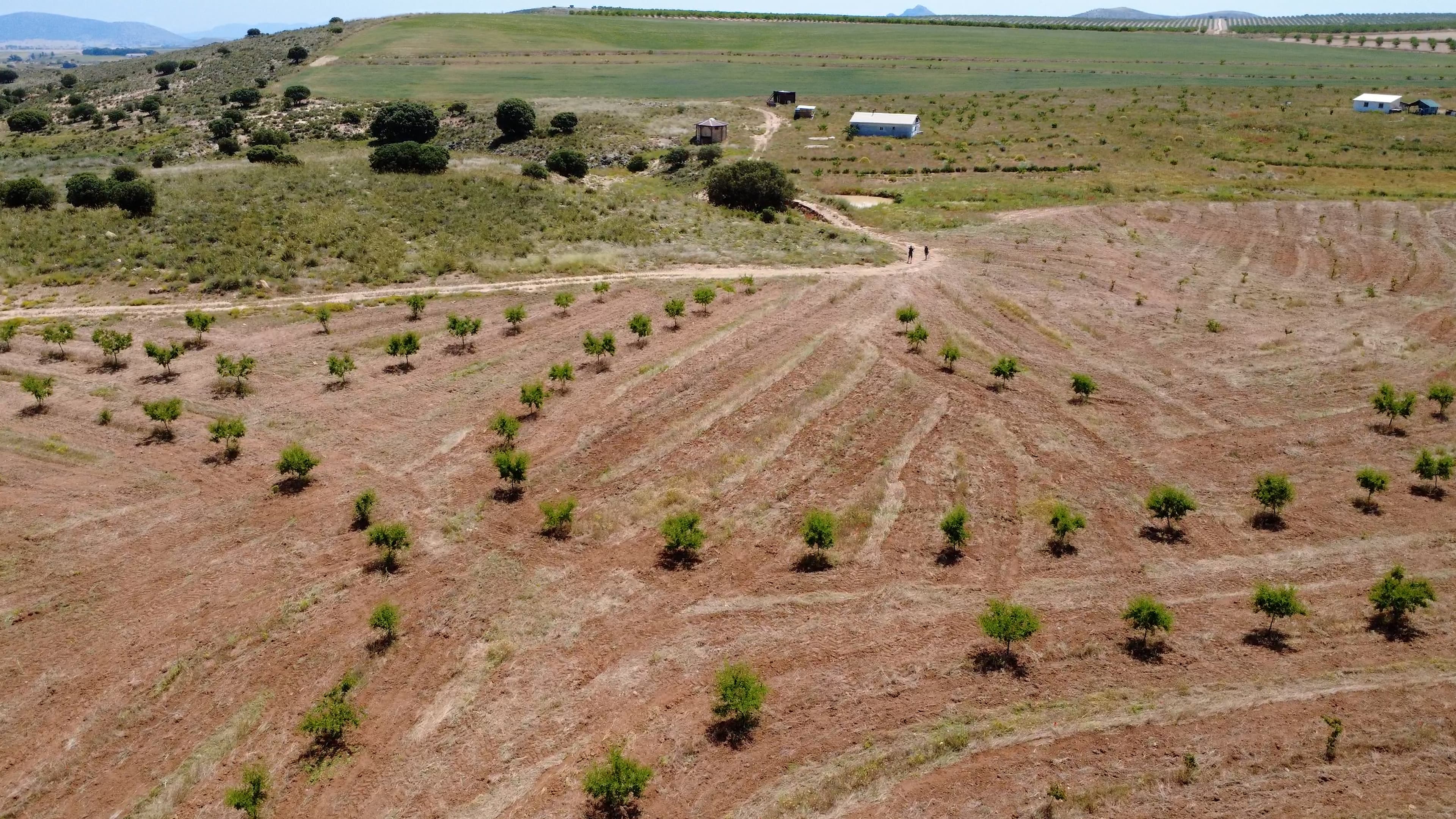
In recent years, agroforestry has gained much attention for its potential to mitigate greenhouse gas emissions and enhance the resilience of agricultural systems. Integrating woody landscape features (WLF), typical of agroforestry, not only enhances biodiversity and ecosystem health but also aligns with broader environmental goals. The European Green Deal, for example, aims to restore high-diversity landscape features on at least 10% of agricultural land by 2030.
However, there is a lack of detailed knowledge about agroforestry systems and woody landscape features, for example regarding biomass and spatial extent and distribution, which is required to assess their carbon content. This issue was recently addressed for the German case in an article published by MARVIC partners Elena Larysch and Christopher Morhart, together with researchers from other projects at the national level.
The article, titled “Hidden gems: small woody landscape features on agricultural land are overlooked in current assessments of agroforestry in Germany” and published in the journal Agroforestry Systems, explores WLF across seven German federal states and how their actual extent on agricultural land compares with state-of-the-art datasets, usually based on low-resolution satellite data.
In this study, WLF were manually identified, delineated and classified using high-resolution digital orthophotos, covering hedgerows, shrubs, tree rows and orchards, among others. According to the authors, the extent of the woody landscape features was twice as large as estimated from the ATKIS dataset, due to a high number of unaccounted small WLF. The article, which can be found here, underscores the need for higher spatial resolutions than previously used for accurate carbon budgeting of WLF, which can in turn foster the promotion of agroforestry systems.