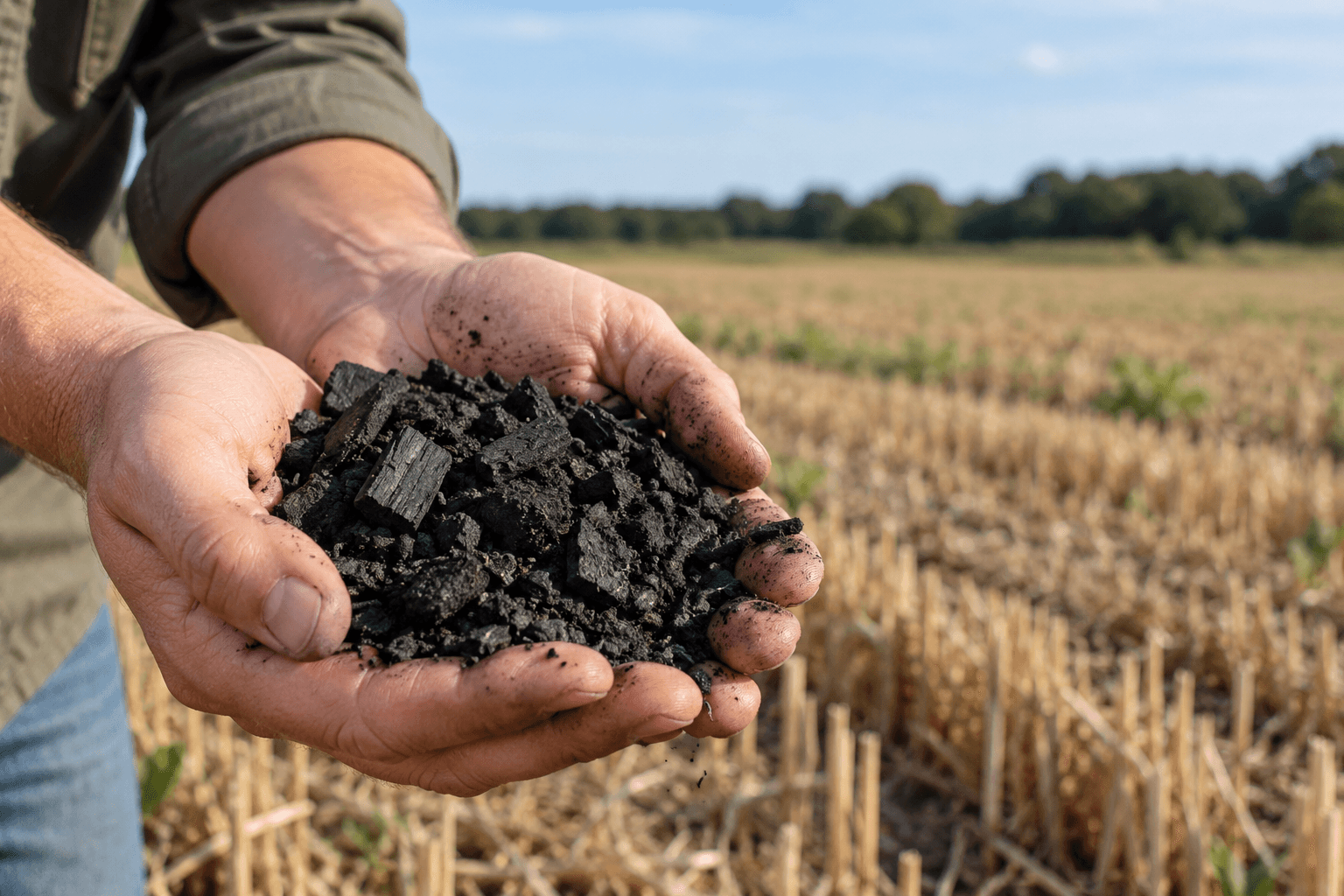
Biochar is increasingly recognised as a promising solution for long-term carbon sequestration in agricultural soils. Produced by heating organic biomass under oxygen-limited conditions, this carbon-rich material can remain stable in soils for extended periods, offering potential advantages over other carbon farming practices such as conservation tillage or cover crops regarding long-term carbon sequestration, monitoring costs and leakage. However, its economic viability depends on several factors, including production costs, biomass availability, carbon prices and competing uses of agricultural residues.
A new study by Addisu Dilnessa, Katarina Elofsson and Uwe Schneider, published recently in the journal Environmental Modelling & Software, investigated the economic potential of biochar application in European agriculture between 2020 and 2050. The research explored how agricultural biomass can be allocated among different uses to maximise the economic benefits of soil carbon sequestration.
The researchers developed a dynamic economic optimisation model covering 26 EU Member States, comparing alternative uses of agricultural residues, including biochar production, bioenergy generation and direct incorporation into the soil, alongside the cultivation of cover crops. The model considered differences in carbon permanence, regional biomass availability, production and transport costs, and the evolution of carbon prices over time.
The results suggest that biochar could become economically viable within the modelled period, with adoption gradually expanding as carbon prices increase. By 2050, the optimal biochar carbon stock was estimated to range from 0.6 to 6.8 tonnes of carbon per hectare, depending on the country, generating an estimated €36 billion in additional net economic benefits across the EU. Regional differences were particularly important, with countries such as France, Germany, Romania and Poland showing substantial economic potential, driven by factors including agricultural land availability, biomass productivity, and production and transport costs.
Overall, the findings demonstrate that biochar can contribute to cost-effective agricultural climate mitigation, although its potential varies considerably across European regions. By integrating carbon permanence, economic considerations and regional conditions, the study provides valuable insights for developing carbon farming strategies and informing policies that support long-term carbon sequestration in European agricultural soils. Follow this link to read the full article .