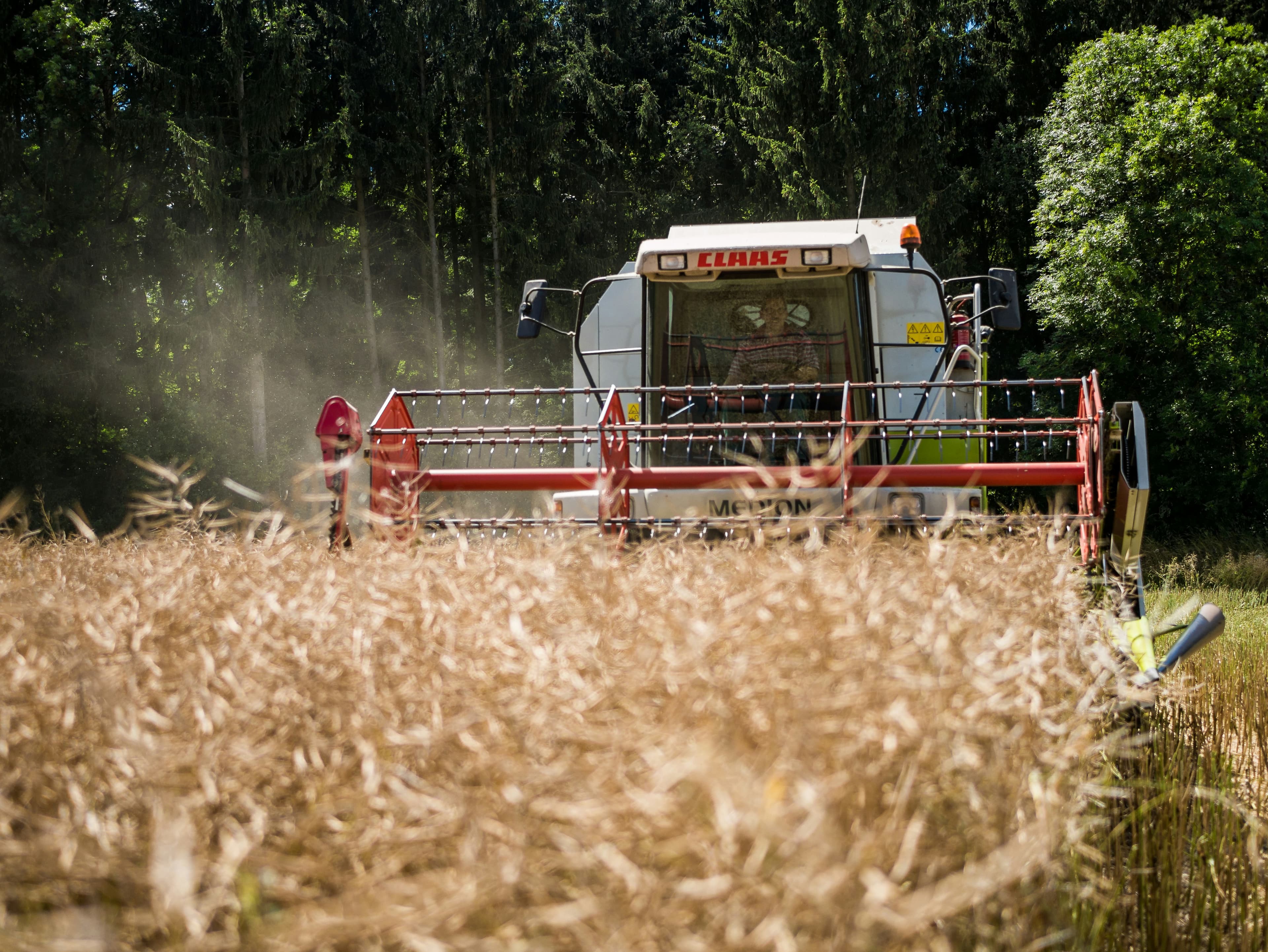
Reliable estimates of carbon inputs from crop residues are essential for accurately modelling soil organic carbon (SOC) dynamics and supporting carbon accounting. While these estimates are commonly derived from allometric equations based on crop yield, their accuracy remains uncertain for some crops and management conditions, potentially affecting predictions of long-term carbon sequestration.
A new study by MARVIC partners Ozan Ozkiper, Iris Vogeler, Lars J. Munkholm and co-workers (Aarhus University), published earlier this year in the Journal of Plant Nutrition and Soil Science, evaluated how different nitrogen fertilisation rates influence biomass production and carbon allocation in winter oilseed rape, and assessed how these differences affect SOC modelling.
The researchers carried out a field experiment in Denmark using six nitrogen fertilisation rates ranging from 40 to 290 kg N ha⁻¹. They quantified carbon stored in different crop components (including straw, stubble, chaff and roots) and compared these measurements with estimates generated by four widely used allometric approaches. They also evaluated how the different estimation methods influenced long-term SOC simulations using the C-TOOL model.
The study showed that not all crop residues respond to fertilisation in the same way. While straw biomass increased with crop yield, stubble and chaff remained remarkably stable across nitrogen treatments. This suggests that assuming these residues increase proportionally with yield may lead to inaccurate carbon input estimates, supporting instead the estimation of fixed carbon inputs for these components.
When the researchers incorporated measured or fixed carbon inputs for stubble and chaff, while refining straw estimates, SOC simulations more closely matched observed soil carbon stocks than simulations relying exclusively on standard allometric equations. In contrast, conventional yield-based approaches tended to overestimate carbon inputs under higher-yield conditions, leading to higher predicted SOC stocks.
Overall, the findings highlight the importance of using crop-specific residue dynamics rather than relying solely on generalised allometric relationships when modelling soil carbon. By improving how carbon inputs from agricultural residues are estimated, the study contributes to more robust SOC modelling, helping reduce uncertainty in carbon accounting and supporting the development of reliable MRV systems for carbon farming. Follow this link to read the full article.